


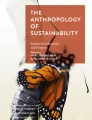
Overview
- This book is open access, which means that you have free and unlimited access
- Explores the cultural and symbolic significance of place, landscape, natural resources, customary practices, and beyond
- Offers an analytical approach to environmental communication that emphasizes sensitivity to people’s worlds of meaning
- Considers case studies from three continents, comparing the dynamics surrounding environmental communication
Part of the book series: Palgrave Studies in Anthropology of Sustainability (PSAS)
Buy print copy
About this book
In the continuous search for sustainability, the exchange of diverse perspectives, assumptions, and values is indispensable to environmental protection. Through anthropological and ethnographic analyses, this collection addresses how interests, values, and ideologies affect dialogue and sustainability work. Drawing on studies from three continents – Europe, North America, and South America – the paradoxes and the plurality of meanings associated with the creation of sustainable futures are explored. The book focuses on how communication practices collide with organizational frameworks, customary practices, livelihoods, and landscape. In so doing, the authors explore the meanings of environmental communication, pushing beyond environmental advocacy rhetoric to emphasize stronger anthropological engagement within communities to achieve more impactful environmental communication practice.
Empirically the book’s chapters explore a diverse set of issues, ranging from coastal management in the European north to Native American place naming in Alaska. They further share findings from studies of contaminated land remediation in Sweden, conflicts over water resources in Chile, management of heritage and national parks in Northern Arizona, and cultural transmission in Slovakia.
Empirically the book’s chapters explore a diverse set of issues, ranging from coastal management in the European north to Native American place naming in Alaska. They further share findings from studies of contaminated land remediation in Sweden, conflicts over water resources in Chile, management of heritage and national parks in Northern Arizona, and cultural transmission in Slovakia.
This is an open access book.
Table of contents (10 chapters)
-
Front Matter
-
Back Matter
Reviews
"Adaptive and inclusive governance, key aspects of steering towards sustainable use of land and water, require cross-cultural and respectful communication. A basic prerequisite is insight into the diversity of ways that people perceive and interact with the rest of nature. This book brings to the fore the significant contributions that anthropological research offers in this respect. The volume not only provides a number of highly interesting and theory-framed cases of the multi-faceted relationships between people and their local environments from various parts of the world, it also stimulates a healthy uncertainty regarding the context and rationale for human actions, which encourages more open-minded approaches in environmental communication and mutual exchange in the search for sustainable solutions."
—Marie Stenseke, Professor in Human Geography, Deputy Dean of the School of Business, Economics and Law, University of Gothenburg, and Co-chair of IPBES Multidisciplinary Expert Panel"Nature, culture, and people are generally perceived as independent entities in the world around us. The environmental situation presents us with new challenges within the confines of our lives on Earth. Researchers seek an explanation for human societies’ various strategies, some of which are rooted deeply in the past; they reveal a faith in the value of models linked to heritage in the form of rituals, social relations, and work techniques, as well as adaptations prompted by changes in the landscape and environment. This collection of studies documents the ongoing processes of diversity that are grounded in environmental and cultural differences across the globe, taking the reader from South and North America (Chile, Arizona, Alaska) to Northern and Central Europe (Sweden, Slovakia). The results demonstrate the surprising diversity of historical contexts of place versus environmental constraints, as well as that of life in depopulated regions."
—Viera Feglová, Emeritus Professor of Cultural Anthropology, Faculty of Social and Economic Sciences, Comenius University, Bratislava
"This work is more than a mere collection of case studies. The authors depict worlds where a significant part of life consists in the collective performance of stories about culture and environment. We all, in fact, take part in this performance, together with our fellow players, who participate in processes of knowledge making in varied ways."—Josef Kandert, Professor of Social Anthropology, Faculty of Humanities, Charles University, Prague
"Environmental conflicts are increasingly heated, and the need to listen and hear diverse voices has never been greater. This timely volume uses case studies from around the world to understand environmental communication from many perspectives. It will help practitioners and theorists understand what is being said, by whom, and to what purpose. With cases including cultural landscapes, community voices, living and material heritage, toxic legacies, continuity and abandonment, this volume brings invaluable anthropological insights and reflections on the connections between language and place."
—Simone Abram, Professor in Anthropology and Co-Director of the Durham Energy Institute, Durham University
"This groundbreaking intervention is fresh, interdisciplinary, and internationally authored. It not only challenges taken-for-granted assumptions about environmental communication and anthropology, but also follows that challenge with a suite of heuristics for ways to deepen what is meant by the label “environmental communication.” The editors have assembled a highly diverse group of authors and integrated their ideas into a superb example of transdisciplinary scholarship that offers insights for other scholars, for advocates, and for citizens. This is a volume that will immediately reward its readers, while simultaneously beckoning them to return over and over."
—Tarla Rai Peterson, Professor of Communication, College of Liberal Arts, University of Texas, El Paso
Editors and affiliations
About the editors
Annelie Sjölander-Lindqvist is Associate Professor of Social Anthropology and Senior Lecturer in Human Ecology at the Gothenburg Research Institute and School of Global Studies, University of Gothenburg, Sweden.
Ivan Murin is Associate Professor of Social and Cultural Anthropology at the Department of Social Studies and Ethnology at Matej Bel University, Slovakia, and visiting scholar at Charles University in Prague, Czech Republic.
Michael E. Dove is a lecturer at the Department of English and American Studies, Matej Bel University in Banská Bystrica, Slovakia.
Accessibility information
PDF accessibility summary
This PDF does Not fully comply with PDF/UA standards but does include limited screen reader support, descriptions for Non-text content (such as images and graphs), bookmarks for easy navigation, and searchable, selectable text. Users of assistive technologies may experience difficulty navigating or interpreting content in this document. We recognise the importance of accessibility and welcome queries about accessibility for any of our products. If you have a question or an access need, please get in touch with us via https://www.springernature.com/gp/info/accessibility
EPUB accessibility summary
This EPUB has been designed with accessibility in mind and aims to meet the EPUB Accessibility 1.0 and WCAG 2.2 Level AA standards. Its features include Alternative Text descriptions for images and other Non-text content, as well as rich navigation that is compatible with screen readers. We recognise the importance of accessibility and welcome queries about accessibility for any of our products. If you have a question or an access need, please get in touch with us via https://www.springernature.com/gp/info/accessibility
Bibliographic information
Book title: Anthropological Perspectives on Environmental Communication
Editors: Annelie Sjölander-Lindqvist, Ivan Murin, Michael E. Dove
Series title: Palgrave Studies in Anthropology of Sustainability
DOI: https://doi.org/10.1007/978-3-030-78040-1
Publisher: Palgrave Macmillan Cham
eBook packages: Social Sciences, Social Sciences (R0)
Copyright information: The Editor(s) (if applicable) and The Author(s) 2022
Hardcover ISBN: 978-3-030-78039-5Published: 15 February 2022
Softcover ISBN: 978-3-030-78042-5Published: 15 September 2022
eBook ISBN: 978-3-030-78040-1Published: 14 February 2022
Series ISSN: 2945-6657
Series E-ISSN: 2945-6665
Edition number: 1
Number of pages: XXXV, 239
Number of illustrations: 38 illustrations in colour
Topics: Social Anthropology, Anthropology, Environmental Policy, Sociology, general, Environmental Communication